
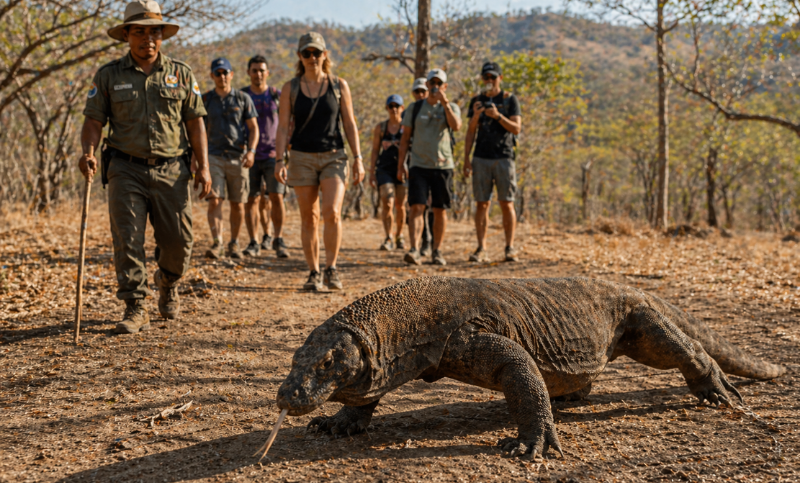
Komodo dragons are the world’s largest lizard, which is already a strong opening line, but seeing one in the wild is better than any fact sheet. They are ancient-looking, deeply unsettling in the best possible way, and one of the few animals that can make a whole group of adults fall silent very quickly.
Who This Is For
Anyone planning to visit Komodo National Park and wanting to understand what the dragon encounter is actually like, how the trekking works, and what the safety rules really mean.
What Komodo Dragons Actually Are
Komodo dragons are giant monitor lizards, not mythical creatures, though that distinction feels a little technical when one is standing ten metres away flicking its tongue at you. They are venomous, fast over short distances, and very much built to remind smaller animals that life is temporary.
They are also endangered, which makes the encounter feel even more significant when it is done properly.
Where You See Them
For travellers, the two main places are Rinca Island and Komodo Island. Rinca is the easier and more common dragon stop on day trips from Labuan Bajo. Komodo Island is larger, further out, and more often included on liveaboards.
If you only have one day, Rinca is the straightforward answer. If you have more time and want the fuller version, Komodo Island earns it.
What the Trek Is Like
You arrive by boat, join a ranger-led group, get a safety briefing, and then head out on foot. Some walks are short and simple. Others are longer and hotter. The terrain is generally manageable, but this is not the place for flimsy shoes and zero water.
Sightings near ranger areas are often the most reliable. Further out, it depends on where the dragons are that day, which is exactly how wildlife should work.
Safety Rules
These are not decorative rules:
- Always stay with the ranger
- Do not move ahead of the group
- Do not run
- Do not crouch close for photos
- Do not try to close the distance yourself
- Tell the ranger if you are menstruating or have an open wound
The point is not to make the experience feel dramatic. It is to make sure it stays memorable for the right reasons.
When to Go
Komodo dragons are present year-round. Dry season usually gives the easier trekking conditions, but the bigger factor for most travellers is simply whether their boat access and day plan run smoothly.
The Honest Summary
Seeing Komodo dragons is absolutely worth doing. Just do it with a good operator, listen to the ranger, and resist every terrible instinct that social media has ever given anyone near wildlife.