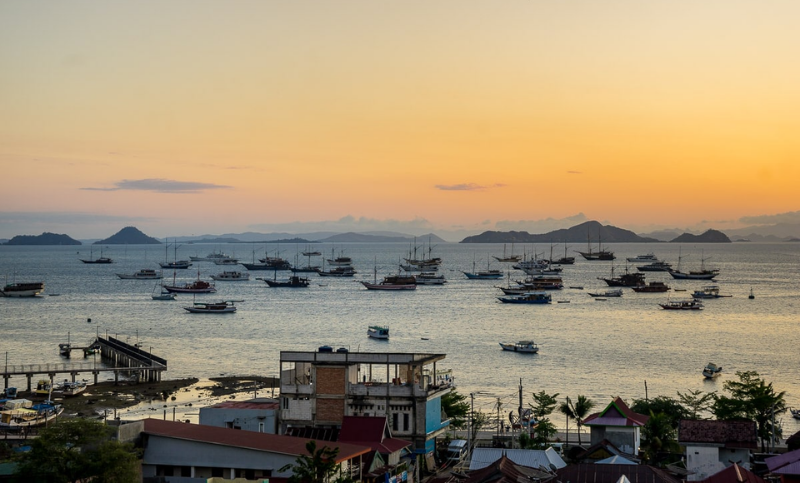
Labuan Bajo has a clear high season (roughly May to October) and a clear wet season (January to March). What most travel guides gloss over is the shoulder season, particularly November and the March–April window; when the weather is genuinely fine most of the time, the boats are less crowded, and the prices are lower. If you have flexibility in your travel dates, it is worth understanding what you are actually getting into.
Who This Is For
Travellers with flexible dates who want to avoid peak season crowds without having a miserable trip. Also useful for budget travellers trying to find the sweet spot between cost and conditions.
November: The Underrated Month
November is arguably Labuan Bajo’s most underrated month. The dry season has officially ended, but in practice, November sees only occasional rain; usually short afternoon showers rather than sustained storms. Seas are still calm enough for the vast majority of day trips and boat outings. Temperatures sit comfortably around 27–30°C.
What you get in November: significantly fewer tourists, prices 15–25% lower on accommodation and tours, and the islands largely to yourself. Padar Island viewpoint without 50 other hikers. Manta Point without a flotilla of boats. It is worth considering seriously.
The honest caveat: Some days in November do bring choppy seas or rain that cancels or shortens boat trips. It is not guaranteed. If you book a Komodo day trip and it is cancelled due to conditions, most operators will reschedule or refund. Ask your operator’s policy before you book.
March to Early April: The Tail End of Wet Season
The wet season runs roughly December through March. February and early March are the riskiest months; sustained rain, rougher seas, and some operators limiting departures. By late March, conditions typically start to improve, and April is generally reliable.
Travelling in late March or early April means catching the very tail of the wet season. Some days will be glorious. Some will not. Budget flexibility and a laid-back attitude make this window enjoyable for the right kind of traveller.
What you should not do: plan a single-day Komodo trip with no buffer if you are travelling in February or early March. The risk of cancellation is real.
What Is Actually Open
In shoulder season, everything is open. Labuan Bajo is not a seasonal town that shuts down. Restaurants, tours, dive shops, and attractions all operate year-round. The difference is in boat conditions, visibility underwater, and crowd levels, not availability.
The Budget Case for Shoulder Season
Accommodation prices drop noticeably outside peak season. Boutique hotels that are fully booked in July can have availability and flexible rates in November. Liveaboard and day trip operators also have more flexibility on group sizes, meaning more personalised experiences.
What Stays Consistent Year-Round
The marine life in Komodo National Park is present year-round. Manta rays, turtles, and the coral reefs do not disappear in shoulder season. Komodo dragons are on the islands 12 months of the year. The land-based day trips, Cunca Wulang, Rangko Cave, Wae Rebo, are largely unaffected by season.