Most people come to Labuan Bajo for dragons, reefs, and boat days. All fair. But the human side of Flores is worth some attention too. The culture that shapes this part of the island is Manggarai, and if you leave without noticing any of it, you have missed more than you think.
Who This Is For
Travellers who want to go a little beyond the obvious highlights and understand something about the people and traditions of the place they are visiting.
The People of Labuan Bajo
Labuan Bajo is not culturally one-note. It is a port town, which means people and influences have been moving through it for a long time. The Manggarai culture of western Flores is the strongest cultural thread in the wider region, but the town also includes longstanding coastal communities such as the Bajo and Bugis, alongside newer arrivals connected to trade and tourism.
In practice, what you feel in Labuan Bajo is a mix of island, coastal, and highland influences sitting alongside each other. It is one of the reasons the town feels more layered than people expect from a place they initially booked for Komodo dragons.
Manggarai Culture and Traditions
Manggarai culture is deeply tied to land, ancestry, ceremony, and community life. In western Flores, most Manggarai communities are Catholic, but older customary traditions remain woven through daily life and ceremonial events.
The best-known cultural expression for visitors is the Caci, a ceremonial whip fight performed by men using whips, shields, and traditional dress. It is dramatic, physical, and symbolic rather than casual entertainment. If you want to see it, Melo Village is one of the most established places to experience it near Labuan Bajo.
Welcoming customs matter too. In some traditional settings, guests may be received with sirih pinang and a pour of local palm wine. The details vary from village to village, which is exactly why it is worth going with someone who knows the local rhythm rather than trying to freestyle your way through it.
Traditional Food to Look Out For
Jagung Bose: One of the best-known traditional foods of East Nusa Tenggara. A corn-based dish that predates rice as the assumed default. Humble, filling, and far more regionally meaningful than another generic fried rice.
Ute Lomak: A vegetable dish usually made with local greens such as papaya leaves, cassava leaves, or banana heart, often finished with coconut or candlenut seasoning.
Roti Kompiang: A round sesame-topped bread associated with Manggarai. Easy to find, easy to carry, and worth trying at least once while you are here.
Moke: The local palm-based alcohol of Flores. Strong, clear, and culturally significant. In village settings it can be part of welcoming or ceremonial hospitality, so if it is offered in that context, the point is respect more than drinking bravely.
Visiting Villages Respectfully
Dress modestly. Covered shoulders and knees are the safe choice in traditional villages.
Ask before taking photographs, especially of elders, ceremonies, or inside houses.
Let your guide lead. Customs are not identical everywhere, and a good local guide knows when to speak, when to wait, and what is appropriate in that particular place.
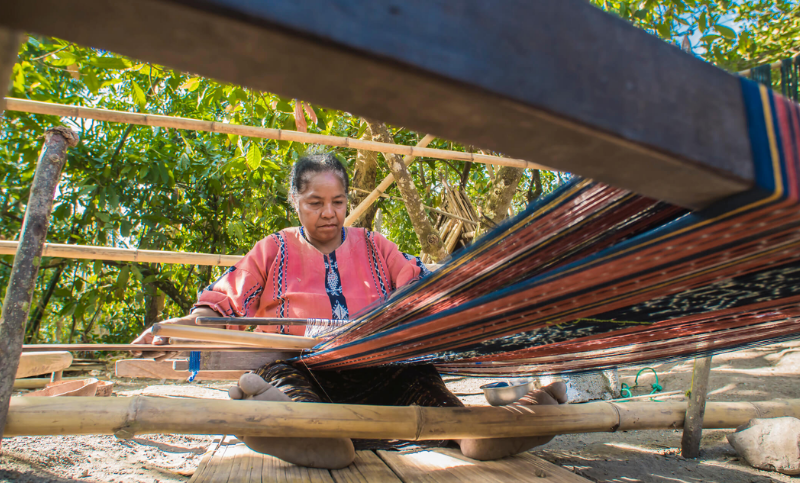
If you buy textiles or handicrafts, buy locally made work where you can. Handwoven cloth and village-made pieces are not just better souvenirs. They are a more direct way to support the people whose culture you are there to admire.