
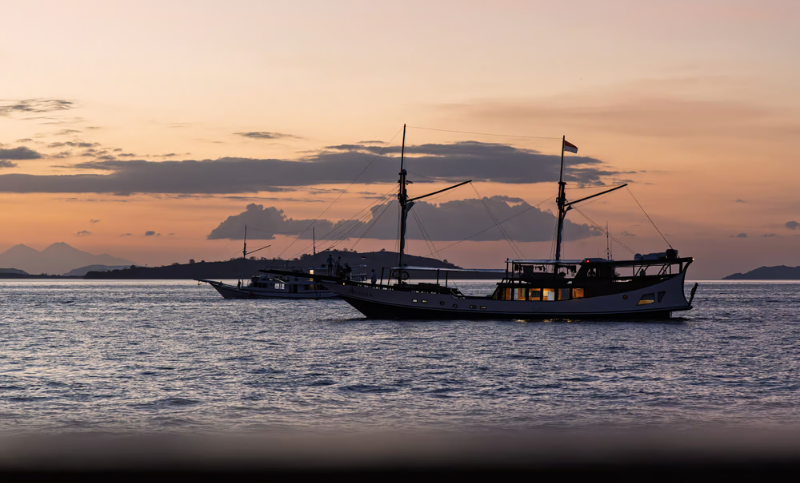
Komodo National Park’s marine environment is driven by some of the strongest currents in Indonesia. Those same currents are part of what make the place so biologically rich. Understanding how conditions shift across the year helps you plan a trip that matches what you actually want to experience.
Who This Is For
Divers, snorkellers, and anyone doing a boat trip to Komodo National Park who wants to understand how sea conditions vary across the year.
What Drives Conditions in Komodo
Sea conditions in Komodo are shaped by two main forces: the seasonal monsoon, which affects surface weather, and tidal movement, which drives underwater currents year-round. The currents do not disappear with the season. They shift with the tides, not just the calendar. Surface conditions, though, are much more seasonal.
April to June: Calm and Building
April marks the transition from wet to dry season. Surface conditions usually improve through the month and are often reliable by May. Seas are generally calm and suitable for most boat trips, including those with inexperienced passengers. Underwater visibility also starts to improve as wet season runoff settles.
July to September: Peak Conditions
This is generally the most consistently calm and reliable window of the year. Surface seas are flat to slight on most days, and underwater visibility often peaks at 15 to 25 metres across many sites. The trade-off is that it is also peak visitor season.
October to November: Transition
Conditions usually remain strong through October. November begins to introduce more variable days as wet season approaches. Many days are still fine for boat trips, but afternoon swell becomes more common. This is also when manta ray sightings often begin to build again.
December to February: Most Variable
This is the most unpredictable period. Surface conditions can range from perfectly fine to rough enough to affect departures, sometimes within the same week. Experienced divers and flexible travellers can still have excellent days, but it is the time of year when backup plans matter most.
Manta ray aggregations often peak during this period, so there is a real upside if you are willing to deal with the variability.
March: Improving
Conditions usually improve through March. Late March is often much more reliable than people expect, and it combines improving sea conditions with still-strong manta sightings. For flexible travellers, it can be one of the more underrated windows of the year.
Currents: A Year-Round Constant
The currents at Komodo’s well-known dive sites, including Batu Bolong, Crystal Rock, and Castle Rock, are driven by tidal movement rather than by season. Both dry and wet season can have strong current days and gentle ones. Conditions should be checked with your guide before each dive regardless of the month.
How Operators Manage Variable Conditions
Good operators check conditions daily and adjust itineraries accordingly. A rough day may mean skipping an exposed site and substituting a more sheltered option instead. The best operators are honest about that before departure. Operators promising a fixed itinerary regardless of conditions are worth being cautious about.