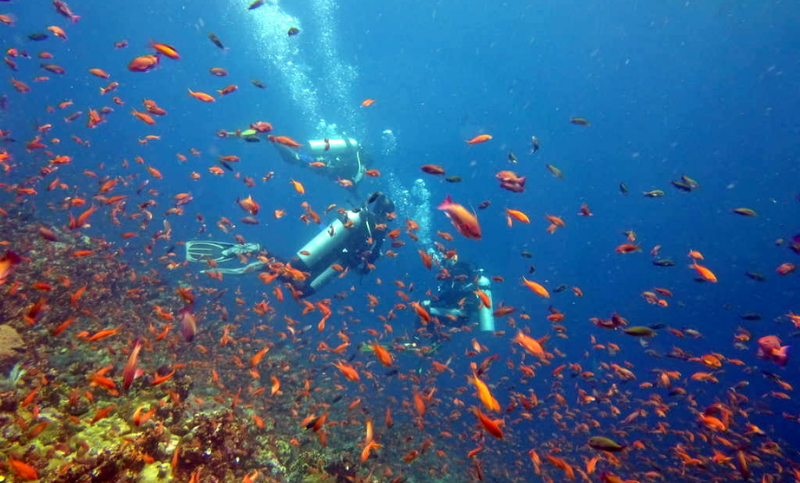
Komodo National Park is diveable all year. The question is not whether you can dive it. The question is what kind of Komodo you want. Blue-water visibility and calmer crossings, or more plankton, moodier conditions, and stronger chances of manta action. Both versions are good. They are just not the same trip.
Who This Is For
Divers and snorkellers trying to work out when to visit Komodo based on what they most want from the water rather than just what month looked convenient on a calendar.
The Two Broad Seasons
Drier season, roughly April to November: usually the better window for calmer crossings, stronger visibility, and the kind of blue-water conditions most people imagine when they picture Komodo diving. This is also the busier stretch of the year.
Wetter season, roughly December to March: more variable weather, more plankton in the water, and a less polished version of the park on the surface. Underwater, though, that same productivity can be exactly what makes the season worth it.
How the Year Usually Feels
January to March: this is the more changeable period. You can get excellent diving, but you need a little more flexibility and a little less attachment to the idea that every day will look postcard-perfect. It is also an important manta window, especially in the south.
April and May: one of the best all-round windows. The weather usually starts settling, visibility improves, and the park still feels less crowded than the absolute peak stretch. Very good if you want balance rather than extremes.
June to September: the classic high season. Better visibility, more reliable surface conditions, and a more straightforward time to plan around if this is your one shot at Komodo. Also the period when the park feels most obviously popular.
October and November: a very good shoulder window. Conditions can still be strong, crowds begin to ease, and manta activity starts to become more interesting again depending on the zone and the year.
Mantas, Visibility, and What to Prioritise
Mantas are not a one-month wonder in Komodo. They are seen year-round, but the better periods shift by area. Southern sites are often strongest from around November into March, while central and northern manta sites can stay active much longer through the year. If mantas are the main event for you, ask which part of the park is producing during your dates rather than relying on one blanket “manta season” line.
If your main priority is visibility and classic reef conditions, the drier months are usually the cleaner bet. If your priority is productivity, movement, and a more dynamic underwater feel, the wetter side of the year can be very rewarding.
What You Are Most Likely to See
Mantas can happen in any month, but they are a smarter seasonal target than most other megafauna in Komodo. Turtles are reliably seen at places like Siaba Besar, which is nicknamed Turtle City for a reason. Macro lovers should keep Cannibal Rock firmly on the list.
Currents by Season
Komodo’s currents are driven more by tides than by neat seasonal categories. That means strong current days and easier days can happen in both halves of the year. Your guide should be reading the tide, the site, and the specific conditions on the day, not just the month. This is why Komodo is such a good diving destination and also why it deserves respect.
If you are newer to current diving, that does not automatically rule Komodo out. It just means you need the right operator, the right site choices, and slightly less ego than usual.