Komodo is one of the few places on earth where mantas, sharks, turtles and healthy coral all turn up in a single day of diving. It’s also a park where the current writes the rules. The honest answer to “what are the best dive sites?” is always “best for whom?”, so this guide sorts Komodo’s famous names by experience level, tells you when to go, and covers what a dive day out of Labuan Bajo actually costs.
The short answer for the impatient: beginners should ask for Siaba Besar and Sebayur, confident divers want Batu Bolong and Manta Point, and experienced divers with drift time in their logbook should do Castle Rock and Crystal Rock in the north. Nobody goes home disappointed.
Who this is for
Divers staying in Labuan Bajo who want to day-trip into the park, from open water newcomers to people with a hundred dives chasing current. If you’re not certified yet, Labuan Bajo is a fine place to fix that: see our guide to learning to dive in Labuan Bajo.
How a Komodo dive day works
Dive boats leave Labuan Bajo harbour around 7am and run two or three dives inside the park, usually in the central area, back by late afternoon. Northern sites mean a longer, earlier day. Expect a three-dive day trip with gear, lunch and guiding to run somewhere around IDR 2,000,000 to 2,800,000 depending on the operator and boat, with park fees on top.
Two 2026 rules to know before you book. First, park entries are capped daily and must be booked ahead through the park’s SiOra system by your operator, so book your dive days three or four days out, and weeks out in high season. Second, divers pay a small daily park surcharge on top of the entrance fee. The full numbers are in our Komodo fees breakdown.
The central park: where most dive days happen
Batu Bolong. A tiny rock pinnacle that barely breaks the surface, dropping into a wall of coral so dense it looks upholstered. Fish life everywhere: turtles, reef sharks, giant trevally, clouds of anthias. Dived at slack tide because the current splits around the rock. Confident divers with decent buoyancy. This is the site people mean when they say Komodo ruined other reefs for them.
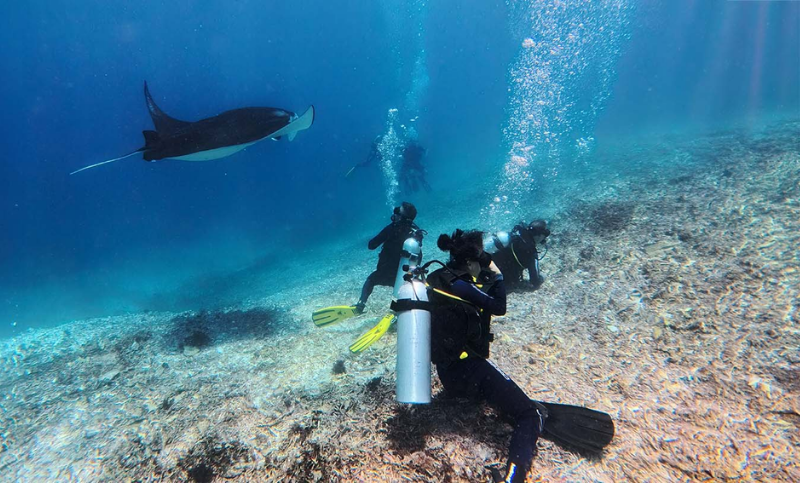
Manta Point (Karang Makassar). A long rubble drift where reef mantas queue at cleaning stations. On a good day you’ll count them in the dozens. The dive itself is easy drifting in a few metres of gentle current; the skill is staying calm and low when a four-metre wing passes overhead. The Manta Point area sits inside the park’s daily visitor quota, so this one especially rewards booking ahead. More on the animals in our manta rays guide.
Siaba Besar. A sheltered bay with seagrass, sandy bottom and more green turtles than you can be bothered counting. Calm, shallow, forgiving. The standard first-dive-of-the-trip and the best beginner site in the central park.
Tatawa Besar and Tatawa Kecil. Tatawa Besar is a lovely soft-coral drift most levels can enjoy. Tatawa Kecil is its sharp-toothed sibling: strong current, big fish, experienced divers only.
Sebayur and Kanawa. Easy reef slopes close to Labuan Bajo, popular for training dives and gentle afternoons. Good visibility, relaxed conditions.
The north: current diving for experienced divers
Castle Rock. A submerged seamount in open water. You descend into blue, hook into the reef edge and watch the show: white-tips, grey reef sharks, barracuda, dogtooth tuna hunting through fusilier schools. Current is the whole point. Advanced certification and real drift experience expected; most shops want 30 to 50 logged dives.
Crystal Rock. Castle Rock’s neighbour, named for the water clarity. Similar big-fish action with spectacular coral on the shallower sections. The classic north-Komodo double header pairs the two.
The Cauldron (Shotgun). A channel dive between Gili Lawa Laut and Gili Lawa Darat that funnels you through a bowl and fires you out the far side on the current. Exhilarating, occasionally humbling. Experienced divers, good guides, and a sense of humour.
The south (seasonal)
In the dry-season months when the north is at its best, the park’s south side gets cold, green and rough. But in the wet season the pattern flips, which is when liveaboards run to sites like Manta Alley, a southern manta aggregation that fires when Karang Makassar is quiet. Day boats rarely go south; if the south is calling you, that’s a liveaboard conversation.
When to dive Komodo
The park dives year-round, but conditions move with the monsoon. Dry season (roughly April to November) is prime for the central and northern sites. Wet season shifts the action south and stirs the visibility in places, though mantas at Makassar are often at their best in the rainy months. The full month-by-month picture is in our diving and snorkelling seasons guide and sea conditions by month.
Tips and mistakes to avoid
- Be honest with your dive shop about your experience. Komodo currents punish rounded-up logbooks, and a good operator will build your three days from gentle to wild in the right order.
- Book dive days early under the 2026 quota rules. The boat having space doesn’t help if the park slots are gone.
- Bring a reef hook if you’re heading north, or ask your operator to lend one. Gloves are banned in the park; hooks are the accepted tool.
- Do the checkout dive without complaint. Every good Komodo operator starts you somewhere easy for a reason.
- Not certified? Do the course here rather than promising yourself next trip. The training sites are genuinely lovely.
- Snorkellers get a serious version of this park too: see our Komodo snorkelling guide.