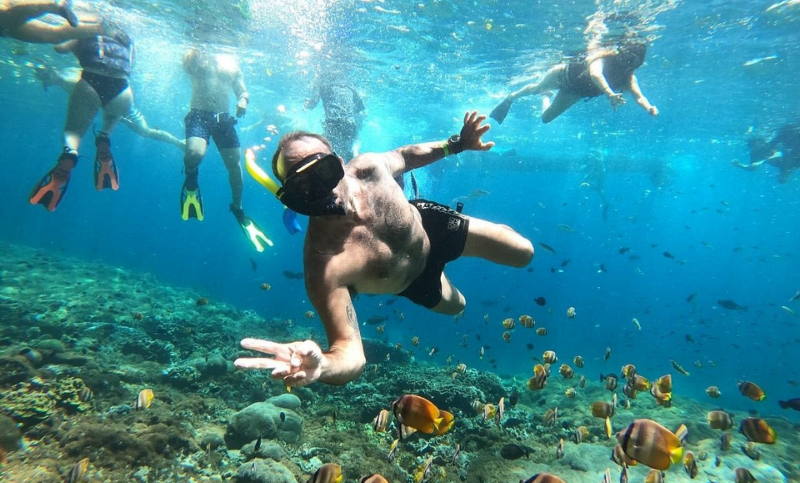
Komodo National Park is one of the richest marine environments in Indonesia. Divers get most of the attention, but the snorkelling here is genuinely excellent and, at the right sites, completely accessible to confident non-divers too.
Who This Is For
Anyone visiting Komodo who does not dive but still wants a proper underwater experience. Also useful for newer divers trying to work out which sites are more forgiving from the surface.
What Makes Komodo Special for Snorkellers
Komodo’s waters are shaped by strong currents and nutrient-rich flow, which is exactly why the marine life is so good. Reef mantas, sea turtles, reef sharks, octopus, clownfish, and very healthy coral can all be seen from the surface at the right sites with the right conditions.
The Best Snorkel Sites
Manta Point: the most famous snorkel stop in the park. This is where many visitors hope to see manta rays from the surface. It can be excellent, but it is not a lazy float. Go with a guide who knows the conditions and do not underestimate the current.
Taka Makassar: a bright sandbar and shallow reef area that is often paired with Manta Point. Beautiful water, easier entries, and one of the more photogenic snorkel stops in the park.
Siaba Besar: often called Turtle City for good reason. A very strong choice for snorkellers who want calm reef, good visibility, and a real chance of close turtle encounters without feeling like they are being thrown into the sporty end of Komodo.
Pink Beach: one of the easiest and prettiest snorkel stops in the wider Komodo circuit. Good shallow reef, clear water, and a much more relaxed feel than the current-heavy sites.
Kanawa Island: a calmer option often visited on Komodo-area day trips. Good for families, newer snorkellers, or anyone who wants a slower, lower-drama swim with coral and fish rather than a big-adrenaline site.
Snorkel Fees
Snorkelling activity fees may be charged on top of the park entry fee. As a rough current guide, many operators work from an additional snorkelling fee of around IDR 50,000 per person, but always confirm what is included in your trip price before you book.
What to Bring
A mask that actually fits your face, a snorkel, fins, reef-safe sunscreen, swimwear, and a rash guard if you burn easily or want a bit more protection. Most trips provide basic snorkel gear, but your own usually makes for a better hour in the water.
An underwater camera is optional, but this is one of the few places where bringing one does not feel overly optimistic.
Currents: What to Know
Komodo’s currents are real. Some snorkel sites are gentle and easy. Others are absolutely not the place to drift off alone thinking vibes will protect you. Ask your guide what the conditions are doing on the day, stay close, and do not treat one calm stop as proof that all of Komodo is beginner water.
Can You Snorkel on a Dive Boat?
Sometimes yes, but do not assume every dive operator is set up to care properly for snorkellers just because they let you on board. If you are not diving, check that the trip is genuinely snorkeller-friendly, not just technically willing to tolerate one.